Repair or Replace: How to Decide on an Industrial Motor
A plant motor going down is not automatically a buying decision. Here's how to think through repair versus replacement, and why the math changes with horsepower.
September 2, 2026 · 3 min read
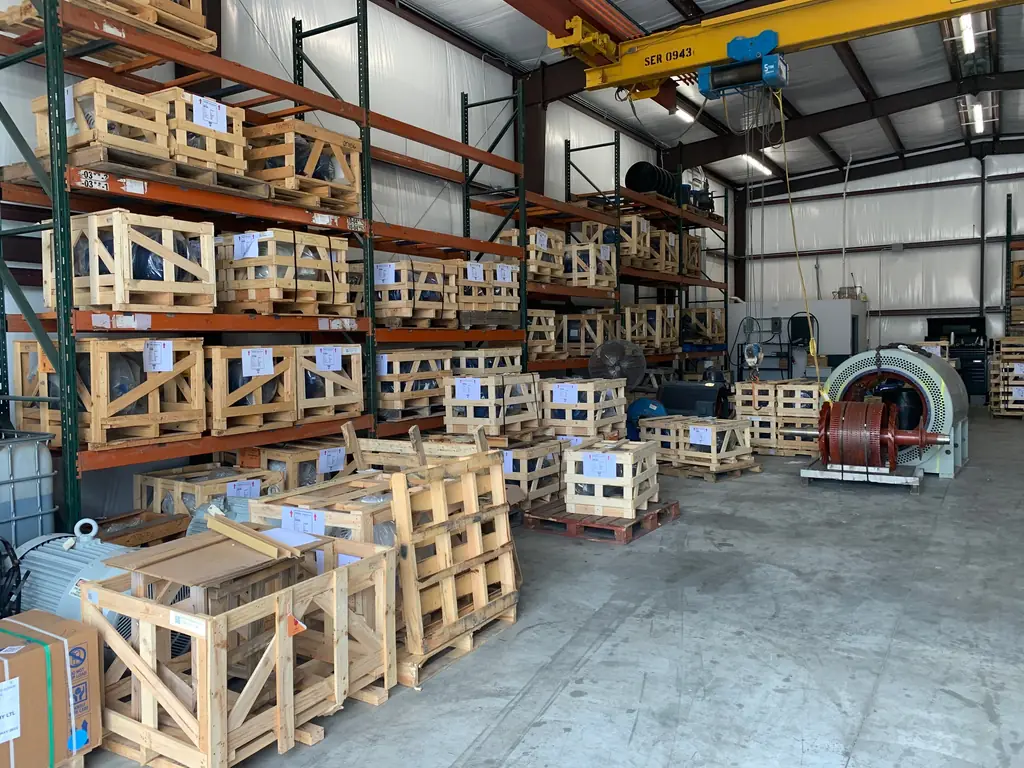
When a motor goes down on the plant floor, the pressure is to replace it fast and stop thinking about it. That is sometimes the right move. It is also, more often than people expect, the expensive one. A rebuilt motor that comes back equal to or better than the original equipment can run as long as a new one, and for anything from fractional horsepower up to 1000 HP, the repair or replace call is worth a few honest minutes before money moves.
Start with what actually failed
Not every motor failure is a motor problem. Bearings wear out on a predictable schedule and are a straightforward repair on almost any frame. A winding that has burned from age or overheating is a rewind job, not a scrap it job, and a shop that rewinds AC and DC motors, coils, armatures and generators every week can bring the electrical side back to full spec. What actually forces a replacement decision is damage to the frame itself, a shaft that has been machined down past a safe diameter over several repairs, or a housing that has cracked. Those are the minority of failures, not the majority.
Where horsepower changes the answer
Below a few horsepower, replacement is often the practical choice simply because stocked motors exist on the shelf in that range, and fractional and small NEMA frame motors are commodity items. A shop stocked from fractional up to 1000 HP can usually put a same class replacement in your hands faster than a rewind would take, if the failure is severe enough to warrant scrapping the original.
Above that range, the math flips. A 50, 100 or 300 HP motor built to your specific mount, shaft length and frame is not sitting on a shelf anywhere. New units in that range are ordered against manufacturer lead times that can run long, and the purchase price climbs steeply with horsepower. A rebuild on the original frame, using the mount, shaft interface and terminal box you already have wired in, sidesteps both problems. It is also the reason plants with large motors tend to keep spares on hand rather than plan to buy new when one fails.
What a rebuild has to actually deliver
Rebuilt is doing a lot of work in that word, and it is worth knowing what should be behind it before you accept a quote. A proper rebuild means the windings are stripped and replaced to the original electrical specification, not just patched. It means the rotor and any shaft work is done to match, with new shafts machined from like alloys when the original is beyond saving. It means the whole rotating assembly is dynamically balanced before reassembly, because a rewound motor that has not been rebalanced will run rough and wear its bearings out early, undoing the point of the repair. And it means someone actually checks alignment before it goes back into service, since a motor that runs true on the bench can still vibrate badly once it is coupled to a pump or gearbox that is out of line.
A practical checklist before you decide
- Is this a common NEMA frame size that could be replaced off the shelf, or a larger or custom motor that would carry a real lead time to replace?
- Is the damage confined to the windings and bearings, or does it extend to the shaft, frame or housing?
- How critical is this motor to production, and is there time to source a like for like replacement if you go that route?
- Has this exact motor failed before? A repeat failure often points to a load, alignment or drive problem rather than a motor problem, and replacing the motor without fixing that will just fail again.
- Can the work be done on-site, or does the motor need to come into a shop for balancing and machine work?
Capitol Electric Motor Repair has been rewinding and rebuilding motors in Oklahoma City since 1964, as a local, family owned shop, with its own dynamic balancing equipment and machine shop for the shaft and housing work a real rebuild needs. On-site service is available at your plant, with 24-hour emergency service, or the work can come into the shop on SW 11th Street. Call (405) 235-9638 to talk through a specific motor before you decide which way to go.
Capitol Electric Motor Repair Inc., (405) 235-9638
Call (405) 235-9638More articles
What a Motor Rewind Actually Involves
Rewinding a motor is a real, sequenced process, not a slogan. Here is what happens between a failed motor arriving and a rebuilt one going back to work.
The Warning Signs a Motor Gives Before It Fails
Motors rarely fail without notice. Heat, noise, vibration and current draw all tell you something beforehand, if someone is paying attention.