What a Motor Rewind Actually Involves
Rewinding a motor is a real, sequenced process, not a slogan. Here is what happens between a failed motor arriving and a rebuilt one going back to work.
September 2, 2026 · 3 min read
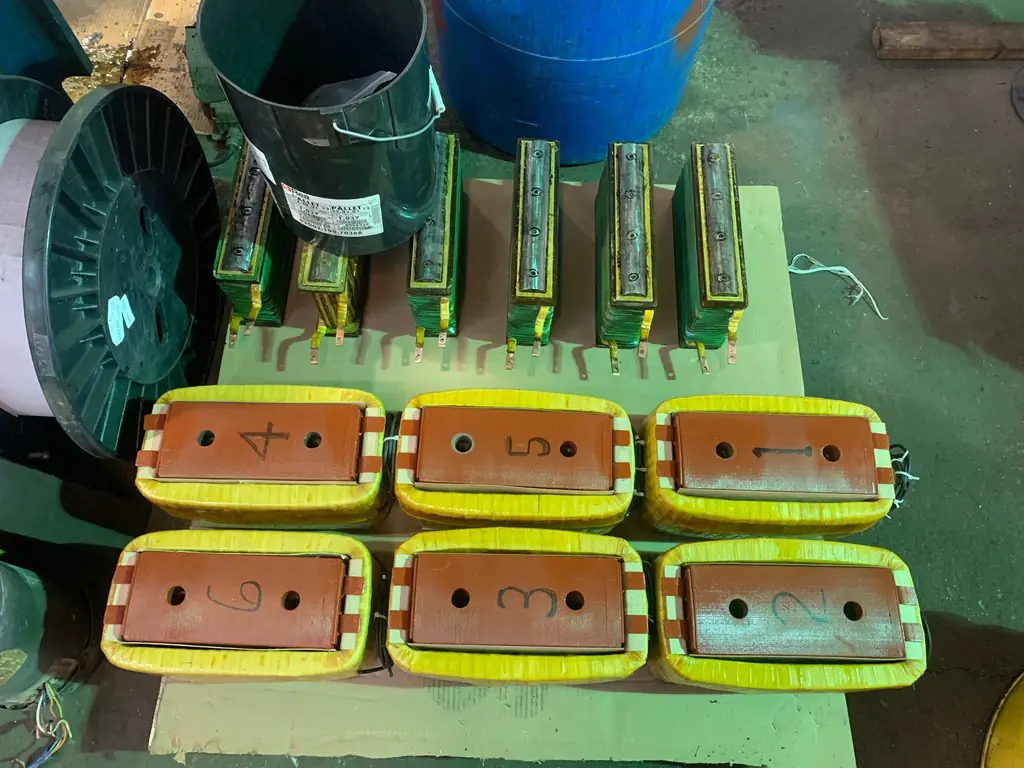
Rewound sounds like a single operation, like changing a belt. It is not. A motor rewind is a sequence of separate jobs, each of which can go wrong on its own, and the difference between a rewind that lasts and one that fails again in a few months usually comes down to whether all of those steps were actually done, not just the electrical part.
Taking the motor apart and reading the failure
The first real work is diagnostic, not electrical. Before anything is rewound, the motor gets pulled apart and the failure gets read: which phase burned, whether the damage is confined to the windings or has reached the core, whether bearings failed first and cooked the windings as a result, and what condition the shaft, housing and end bells are in. A rewind that skips this step and just replaces the windings on a motor with a deeper problem is a rewind that comes back.
Stripping and rewinding the coils
The old windings are stripped out completely, and new coils are wound to match the original electrical specification, the same wire gauge, turn count and connection pattern the motor was built with. This is the part of the job that gets shortened by the word rewound, but it is where equal to or better than the original equipment is either earned or not. Getting it wrong does not usually show up on day one. It shows up as a motor that runs hotter than it should, draws more current than the nameplate says, or fails again sooner than it ought to.
The mechanical work most people never see
A motor rewind is not only electrical. Shafts wear at the bearing seats and can be machined and built back up rather than replaced outright, and when a shaft is too far gone, a new one gets machined from like alloys to match the original. Bearing housings and end bells that have been damaged get repaired on the same machines used for that work rather than sourced as new parts. If it turns out that replacing a shaft outright is more practical than trying to save it, a vertical press is the right tool to remove and reinstall it without damaging the housing around it.
Balancing, and why it is not optional
Once a motor is reassembled, its rotating assembly gets dynamically balanced before it ships. This is easy to treat as a formality, and it is not one. An unbalanced rotor vibrates, and vibration is what wears out bearings early, loosens couplings, and eventually takes the motor back apart from the inside. A shop with its own dynamic balancing equipment can do this in-house as a standard step rather than as an extra service, which is worth asking about when you are comparing quotes, because a rewind without balancing is a rewind that is only half finished.
Putting it back into service
The last step happens outside the shop as often as inside it. Vibration analysis and alignment checks, done either at the shop or on-site at a customer's plant, confirm the motor is running true once it is coupled back up to whatever it drives, a pump, a fan, a gearbox. A motor that tests perfectly on a bench can still run rough once it is bolted to a misaligned pump shaft, so this last check is what actually determines whether the rewind holds up in service.
Why this sequence matters to you
None of this is visible from outside a finished motor. Two rewinds can look identical sitting on a pallet, and one can last years while the other fails again within months, because the difference lives in whether every step above was actually done and done in order. That is the real content behind equal to or better than the original equipment, and it is worth asking a shop directly which of these steps they do in-house versus send out.
Capitol Electric Motor Repair has been doing this work in Oklahoma City since 1964, as an EASA member and TECO Westinghouse certified shop, with its own dynamic balancing equipment, vertical press, and machine shop on site. Fractional to 1000 HP, AC and DC. Call (405) 235-9638 or stop by the shop at 2215 SW 11th St, Monday through Friday, 8 to 5.
Capitol Electric Motor Repair Inc., (405) 235-9638
Call (405) 235-9638More articles
Repair or Replace: How to Decide on an Industrial Motor
A plant motor going down is not automatically a buying decision. Here's how to think through repair versus replacement, and why the math changes with horsepower.
The Warning Signs a Motor Gives Before It Fails
Motors rarely fail without notice. Heat, noise, vibration and current draw all tell you something beforehand, if someone is paying attention.