Variable Frequency Drives, Explained in Plain Terms
A VFD does one thing, it changes how fast a motor turns, but that one thing pays for itself in specific places and not in others.
September 2, 2026 · 3 min read
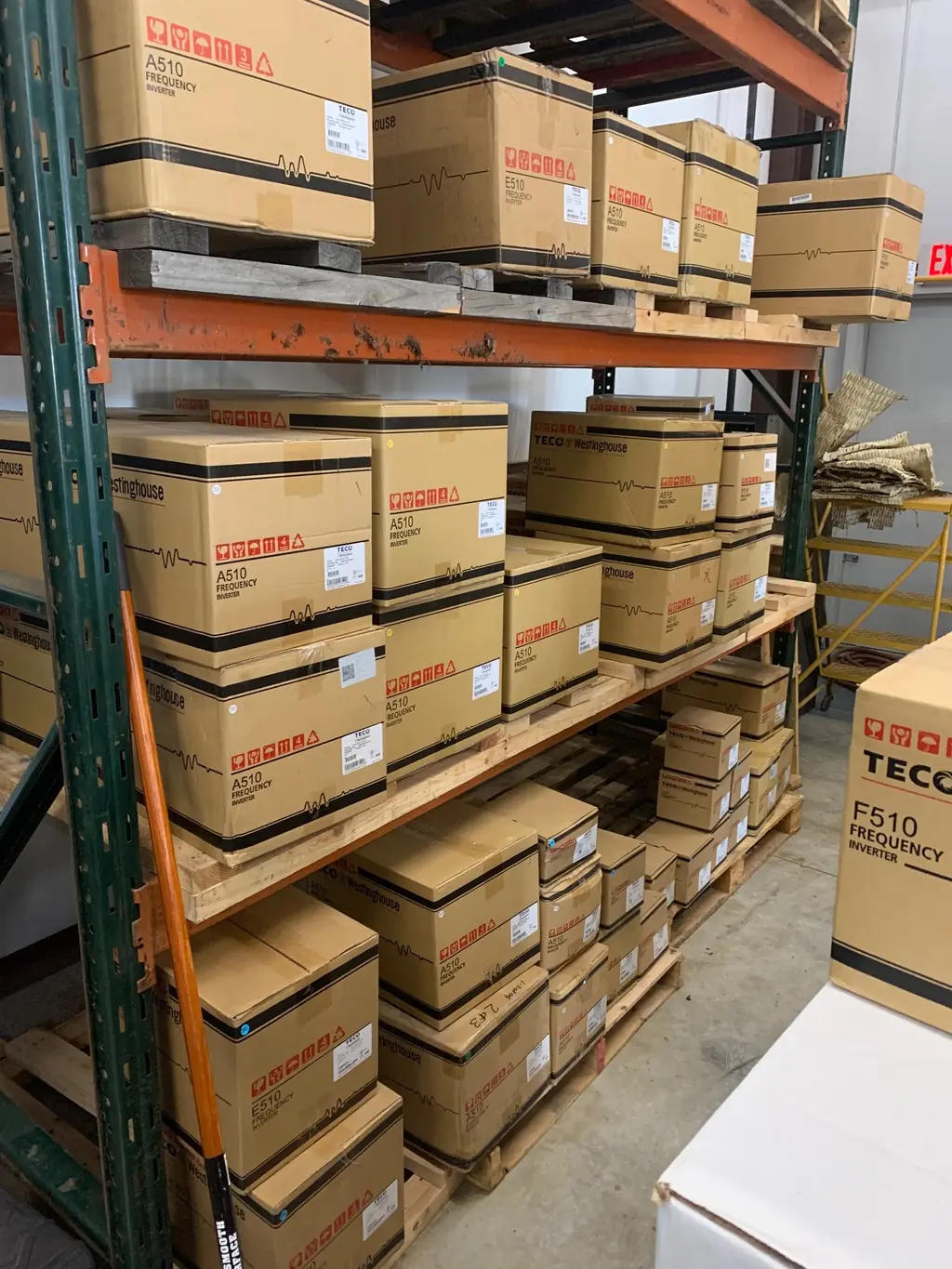
Variable frequency drives get talked about as a broad efficiency upgrade, which makes them sound more complicated than what they actually do. A VFD does one specific thing: it changes the frequency of the power going to a motor, and because a standard AC motor's speed is tied directly to that frequency, changing it changes how fast the motor turns. Everything else, the energy savings, the reduced wear, the smoother startup, follows from that one mechanism.
Why speed control matters more than it sounds like it should
Without a drive, a motor connected directly to line power runs at essentially one speed, full speed, whenever it is on. If you need less output than that, the traditional way to get it is to throttle mechanically, a damper on a fan, a valve on a pump, while the motor itself keeps running flat out and wasting the difference as heat and pressure against a restriction. A VFD instead slows the motor down to match what is actually needed, so the motor draws less power because it is doing less work, not because something downstream is fighting it.
Where this pays for itself: pumps and fans
Pumping, HVAC and irrigation applications are where VFDs earn their cost back fastest, and there is a specific reason for that. For centrifugal pumps and fans, the power needed to move a given flow rate falls off sharply as speed drops, so even a modest reduction in speed produces a much larger reduction in energy use. A fan or pump that only needs to run at partial speed most of the time, rather than running flat out against a damper or valve, can use meaningfully less power over a year of operation. This is exactly why VFDs are common on building automation systems, industrial pumping, and agricultural and irrigation applications, where the load varies through the day and full speed is only actually needed some of the time.
What else a drive does besides save energy
- Soft starting. A motor started directly across the line draws a large inrush current and takes a mechanical jolt at startup. A VFD ramps the motor up to speed gradually, which reduces wear on the motor itself and on whatever it is connected to, belts, sheaves, couplings and gearboxes.
- Lower starting current. Because startup is gradual instead of instant, the demand spike on a facility's electrical system is smaller, which can matter for demand charges on larger motors.
- Quieter operation. Slowing a fan down reduces the noise and duct rumble that comes with running it at full speed all the time when full airflow is not actually needed.
- Repeatable control. A drive lets you dial in a specific speed and hold it, rather than approximating output with a mechanical restriction that drifts and needs readjusting.
Where a VFD does not help
A drive is not useful on every motor. Constant load applications that genuinely need full speed all the time, with no variation in demand, do not have anything to slow down to, and the cost of the drive has nothing to offset it against. And a VFD does not fix a mechanical problem. A motor that is worn, misaligned or on failing bearings will still fail on a schedule of its own regardless of what drives it. A drive controls speed, it does not correct wear.
Programming and integration
A drive on its own is only half the job. Getting one to actually do what a plant needs, ramping profiles, setpoints tied to a process, integration with a PLC or building automation system, is a programming task as much as an electrical one. Application, installation and start-up work on a new drive, and integrating drives with PLCs, HMIs and motor control systems on an existing line, is a different skill set from simply bolting a box to the wall and wiring it up.
Capitol Electric Motor Repair sells, installs, programs and services AC variable frequency drives for pumping, irrigation, building automation and industrial applications, and is a stocking distributor with technical support direct from the manufacturers behind it. Based in Oklahoma City since 1964. Call (405) 235-9638 to talk through a specific application.
Capitol Electric Motor Repair Inc., (405) 235-9638
Call (405) 235-9638More articles
Repair or Replace: How to Decide on an Industrial Motor
A plant motor going down is not automatically a buying decision. Here's how to think through repair versus replacement, and why the math changes with horsepower.
What a Motor Rewind Actually Involves
Rewinding a motor is a real, sequenced process, not a slogan. Here is what happens between a failed motor arriving and a rebuilt one going back to work.